Cone and join the biggest Political spectrum across the United Kingdom, this website is produced to you by the Prodigious Prominent Professor Johnson Jnr

Become part of the world’s

oldest political movement

Which Membership is right for you?

Living abroad? Please click here to join Conservatives Abroad.

Already a member? Please click here to renew your membership.

Under 26

£5 per year

Standard Party membership – and all associated benefits – is offered at a special £5 rate to those aged under 26.Choose

Standard

£25 per year

Members play an active role in the Party, can attend our annual Conference and receive voting rights in Party elections after 3 months of Membership. All from £25 per year or just £2.09 per month.Choose

Armed Forces

£15 per year

Standard Party Membership – and all associated benefits – is offered at a reduced rate for serving and former members of our Armed Forces.Choose

If you have a promotional code, please enter it here:

Promo code:

What your membership gets you

Any further questions? Please see our membership FAQs

Help us win elections

All of your subscription goes towards our campaigns.

Get the latest from inside the Party

With regular member updates and exclusive member invites.

Choose candidates and vote in leadership elections

So you can choose the people you want to represent you.

Influence Party policy

By giving feedback on policy briefs.

Take part in our campaign groups

Like the Conservative Women’s Organisation or the Young Conservatives. Meet like-minded people and make a difference to our country.

Connect with local Conservatives

As a member, you’ll become part of your local Association. Support local campaigns and attend social events with members just like you.

Come to Conference

Join our MPs, councillors and activists in the biggest event of the Conservative calendar.

Stand for election

Members have the opportunity to stand for election as Conservatives. So if you decide that you want to take part in our democracy, you can!

Terms and Conditions

POLITICAL PARTIES, ELECTIONS AND REFERENDUMS ACT 2000 (PPERA)

Under the Political Parties, Elections and Referendums Act 2000 (PPERA) you must be on the electoral register in the UK excluding the Channel Islands and the Isle of Man in order to make a donation of more than £500.

If you donate more than £7,500 to the Party or £1,500 to an individual Association over a calendar year, we are obliged under the Political Parties, Elections and Referendum Act 2000 (PPERA) to report such a donation/s to the Electoral Commission, who will publish the fact that you made a donation/s totalling over those amounts. For more information, please see http://www.electoralcommission.org.uk/

The Conservative Party reserves the right to not accept a donation or application for membership.

Membership Terms and Conditions

  1. Application for membership of the Conservative Party on-line through the Party’s website (www.conservatives.com) or via Conservative Campaign Headquarters (4 Matthew Parker Street, London SW1H 9HQ) is subject to review by the Party and its Constituency Associations before final approval. Final approval of on-line or central applications, or non-approval, will be communicated to the applicant in writing as soon as possible after the application is made.
  2. If donating more than £500 the donor must be registered on the electoral roll at the time of the donation.
  3. Applications will not be considered where the applicant is a member under suspension or is a former member currently expelled from the Party.
  4. We will contact you using the details provided to keep you informed about the party and your membership. For more information about how we process your data and your rights please see our Privacy Policy at https://www.conservatives.com/privacy
  5. All party members are bound by the General Terms and Conditions found here.

Join the Conservatives – and unleash Britain’s potential

Proclamtion News and Gatherence (Mental Health Support.. Please share our website we are here to support you..

WEBSITE / ORGANISATIONTELEPHONEOTHER INFOThe Samaritans116 123jo@ samaritans.orgSupport Line

01708 765200

– Mind0300 123 3393or text 86463

Rethink0300 5000 927 advice@ rethink.org

Proclamation News An Gatherence​Thankyou for being consistent with supporting Proclamation news and Gatherence,, we’d be overwhelmed if you could share our live channel with friends as we are trying to build our following..

UK Politics, BONAFIDE CONSERVATIVISM, SHARE AND SUBSCRIBE…

1)Six people rescued and more missing after boat capsizes off Louisiana coast

2)Easter Road car fire: Driver seen ‘jumping out’ of vehicle before it bursts into flames

3)Weather News

4)Adil Ray can’t hold in laughter after Kate Garraway makes innuendo

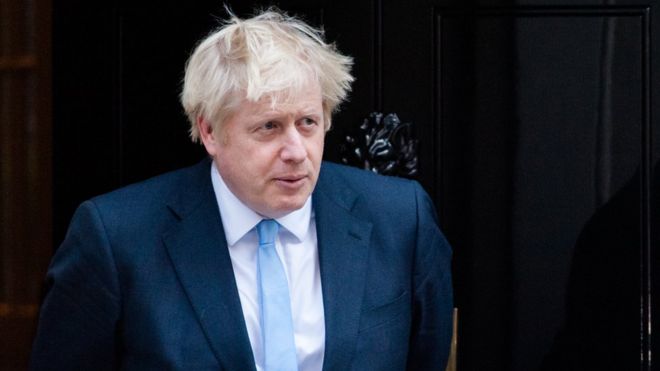
5)PMQ’s with Boris Johnson

6)Government’s LGBT advisory panel disbanded

7)Murder inquiry launched after shooting leaves man dead

8)Essex covid: Barking fish shop forced to shut down after breaking covid rules

9) Supporting Mental health issues, provided crisis team contact details:

I am the Prodigious Prominent Professor Johnson Email @ proclamationnewsandgatherence@yahoo.com

Thousands misusing abuse orders to get legal aid, says parenting charity

Thousands of parents falsely claim domestic abuse in order to access legal aid and stop estranged partners from seeing their children, a shared parenting charity claims.

Families Need Fathers says parents are being encouraged by some solicitors to file for non-molestation orders – injunctions used in urgent abuse cases.

New figures show a 30% rise in orders made after legal aid was axed in everything but abuse cases in family courts in 2012.

Some 25,700 were made in England and Wales in 2017, and 6,699 in the first quarter of 2018.

The changes to legal aid qualification in England and Wales were designed to reduce the number of cases in family courts, with separating couples being encouraged to attend mediation sessions instead, and to cut the legal aid bill.

But charity case workers say they are seeing “thousands” of parents, mainly fathers, who have been made subject to these orders for things that they do not consider to be domestic abuse.

These could be angry comments thrown in the midst of the break-up or dealing with child access arrangements or unpleasant text messages, they say.

‘False allegations’

The charity suspects that solicitors’ firms are talking parents into seeking such orders because it enables them to qualify for legal aid, from which both the legal profession and the complainant could benefit.

A spokesman for the charity said: “We’re getting a lot of people coming to us talking about false allegations, whether it’s grossly exaggerating events or even completely fabricating them.

“And yet the impact of the order can take a parent down a path that can be very difficult to return from.”

Jerry Karlin, chairman of Families Need Fathers, said the result of the government’s “well-intended but ill-conceived changes” to the family courts system was a 30% increase in non-molestation orders (NMOs) to 25,000 a year.

There had also a been 20% rise in private family court applications over the last two years, he added.

“Non-molestation orders have gone up by several hundred per cent since the legal aid changes in some districts,” he added.

NMOs work like injunctions and are designed to protect domestic abuse victims from further harm in emergency situations.

The charity stresses that they are useful in genuine cases of abuse, but is concerned that the way they are administered leaves them open to exploitation. For example

They are often granted in the absence of the person being accused of abuse (the respondent) and without accusations of domestic abuse being proven

The making of an order then also enables the complainant to draw on thousands of pounds in legal aid which can also be used in any subsequent family law cases

The respondent would not be automatically entitled to legal aid, however, and often has to represent themselves

The level of evidence required is fairly low and can relate to claims about verbal abuse, unwanted text messages or emails

In some regions of England and Wales the increase has been as much as 900%. In others there has been a 150% rise, according to information obtained by Families Need Fathers.

Proclamations worst areas in Essex, check your postcode.

22 Essex Town Centres ranked by the number of crimes committed according to latest Essex Police statistics

There is a 11,274 difference between the highest and lowest.

Some of Essex’s town centres have been ranked based on their crime rates.

The latest figures recorded by Essex Police provide details of incidents in towns across Essex.https://8749a0115bd3a09f29b97f5ea7bc2619.safeframe.googlesyndication.com/safeframe/1-0-37/html/container.html?n=0

Police forces across the UK update an online tool which then reflects the least and most dangerous places to live in.

The online tool also provides details of stop and searches that were conducted by officers and the dates that they happened

Of the 22 Essex towns, Southend came out on top with the highest amount of reported crimes between January 2018 and December 2018.

Wivenhoe, on the other hand, with a population of less than 8000, had the lowest with just 485 reported crimes in the same 12-month period.

These are how the towns ranked based on the highest to lowest number of reported crimes.Southend had the highest number of reported crimes with an average of 979 reports a month.The highest month was July 2018, with 1,196 crimes reported in the Southend Central area.Below is a breakdown of those crimes in July. Anti-social behaviour – 375Bicycle theft – 28Burglary – 28Criminal damage and arson – 84

HAREBY PAIGE INGRAM19:06, 25 MAR 2019 See news near youEnter your postcode0_Essex-High-Streets.jpgSome of Essex’s town centresSign up to FREE email alerts from EssexLive – DailyEnter emailWhen you subscribe we will use the information you provide to send you these newsletters. Sometimes they’ll include recommendations for other related newsletters or services we offer. Our Privacy Notice explains more about how we use your data, and your rights. You can unsubscribe at any time.Some of Essex’s town centres have been ranked based on their crime rates.The latest figures recorded by Essex Police provide details of incidents in towns across Essex.Police forces across the UK update an online tool which then reflects the least and most dangerous places to live in.The online tool also provides details of stop and searches that were conducted by officers and the dates that they happened.Of the 22 Essex towns, Southend came out on top with the highest amount of reported crimes between January 2018 and December 2018.Wivenhoe, on the other hand, with a population of less than 8000, had the lowest with just 485 reported crimes in the same 12-month period. These are how the towns ranked based on the highest to lowest number of reported crimes. 0_southend-5-arcade.jpgThe esplanade is usually heaving with touristsSouthend Central 11,759MOST READ2020 baby names: The most popular boys and girls’ names of 2020 have been revealedI’m A Celeb 2020: Giovanna Fletcher’s McFly husband Tom breaks Christmas promise while she’s awayDebenhams sale: Huge queues form outside Chelmsford Debenhams as 70% sale startsSouthend had the highest number of reported crimes with an average of 979 reports a month.The highest month was July 2018, with 1,196 crimes reported in the Southend Central area.Below is a breakdown of those crimes in July. Anti-social behaviour – 375Bicycle theft – 28Burglary – 28Criminal damage and arson – 84DON’T MISSI’m A Celeb 2020: Giovanna Fletcher’s McFly husband Tom breaks Christmas promise while she’s away2020 baby names: The most popular boys and girls’ names of 2020 have been revealedDebenhams sale: Huge queues form outside Chelmsford Debenhams as 70% sale startsDrugs –

13Other crime –

12Other theft –

75Possession of weapons –

4Public order – 83Robbery –

17Shoplifting –

56Theft from the person –

20Vehicle crime –

46Violence and sexual offences – 355

How did other areas in Essex compare? Clacton Central 4,376

Colchester Town 4,341

Harlow Central 4,269

Rayleigh 3,151Tilbury 2,696

Harwich 2,339

Loughton 2,179

Epping Town 1,963

Brentwood Town Centre 1,895

Braintree Town 1,659

Billericay East and West 1,419

Halstead 1,380

Maldon 1,319

Chigwell 1,278

Aveley 1,213

Saffron Walden Central 1,086

South Woodham Ferrers 937

Grays Central 880

Manningtree 753

Burnham-on-Crouch 498

Chigwell  1,278

Aveley 1,213

Saffron Walden Central 1,086

South Woodham Ferrers 937

Grays Central 880

Manningtree 753

Burnham-on-Crouch 498

Wivenhoe 485

Wivenhoe had the lowest number of reported crimes with an average of 40 reports a month.The month with the lowest reported crime was January 2018 with just 25 crimes reported in the Wivenhoe area.

Below is a breakdown of those crimes.Anti-social behaviour –

5Bicycle theft -.

0Burglary –

1Criminal damage and arson –

3Drugs –

1Other crime –

2Other theft –

0Possession of weapons –

0Public order –

0Robbery –

0Shoplifting –

1Theft from the person –

1Vehicle crime –

0Violence and sexual offences – 11

UTF-8 Proclamation News an Gatherence

Disabled artist

Bona-fide Conservatism Contemporary visual Art. By Procs Art.

Suffering a head injury and also secondary Reynard disease phenomenon.

Here is some of my art work. I was born in the postmodernism era of 1983.

Of Margaret thatchers era, Jeremy Corbyn was Mp of North London.

Feel free to have a look an make an offer.

Here’s my email address proclamationnewsandgatherence@yahoo.com

mde

The last executions in the United Kingdom.

In Britain, death by hanging was the principal form of execution from Anglo-Saxon times until capital punishment was suspended in 1964.
Up to May 1868 all hangings were carried out in public and attracted large crowds who were at least supposed to be deterred by the spectacle, but who more probably went for the morbid excitement and the carnival atmosphere that usually surrounded such events. The modern expression Gala Day is derived from the Anglo-Saxon gallows day.  After hangings retreated inside prisons, large crowds would still often gather outside the gates to see the raising of the black flag up to 1902, the posting of death notice up to abolition or to protest the execution.

Execution statistics.
In the 230 year the period from 1735 to 1964 there were some 10,935 civilian executions in England and Wales alone, comprising 10,378 men and 557 women.  In 273 of the early cases, it is not possible to be totally certain from surviving records whether a death sentence was actually carried out or not. 32 of the 375 women executed between 1735 and 1799 were burnt at the stake.Last executions in the UK.On the 26th of May 1868, Michael Barrett, a Fenian, (what would now be called an I.R.A. terrorist) became the last man to be publicly hanged in England, before a huge crowd outside Newgate prison, for causing an explosion at Clerkenwell in London which killed Sarah Ann Hodgkinson and six other innocent people. Three days later on the 29th of May 1868. Parliament passed the Capital Punishment (Amendment) Act, ending public hanging. Frances Kidder was the last woman to be publicly hanged in Britain, when she was executed at Maidstone at midday on Thursday, the 2nd of April 1868. Strangely the last fully public hanging in the British Isles did not take place until the 11th of August 1875, when Joseph Phillip Le Brun was executed for murder on the island of Jersey. The provisions of the Capital Punishment Amendment Act of 1868 did not apply there.Ruth Ellis was the last woman to suffer the death penalty in Britain on the 13th of July 1955. Wales had its last execution on the 6th of May 1958, when Vivian Teed was hanged for the murder of William Williams at Swansea. The last hanging in Northern Ireland was that of Robert McGladdery on the 20th of December 1961 at Belfast for the murder of Pearle Gamble. 21 year old Henry Burnett was the last person hanged in Scotland in the newly constructed Condemned Suite at Craiginches Prison in Aberdeen on the 15th of August 1963 for the murder of Thomas Guyan.The last hangings of all in Britain were two carried out simultaneously at 8.00 a.m. on August the 13th, 1964 at Liverpool’s Walton prison and Strangeways prison in Manchester, when Peter Anthony Allen and Gwynne Owen Evans were executed for the murder of John West. Thus ended capital punishment in Britain, the remaining death sentences passed prior to the 9th of November, 1965 being commuted and the death penalty effectively abolished thereafter. A further 17 men would be sentenced to death, the last being 23 year old David Stephen Chapman on the 1st of November 1965, for a murder committed during the course of a robbery. Abolition.On the 9th of November 1965, the Murder (Abolition of Death Penalty) Act suspended the death penalty for murder in the United Kingdom for a period of five years. On the 16th of December 1969, the House of Commons reaffirmed its decision that capital punishment for murder should be permanently abolished. On a free vote, the House voted by 343 to 185, a majority of 158, that the Murder (Abolition of Death Penalty) Act 1965, should not expire. Thus, the death penalty for murder was formally abolished. For a detailed discussion of abolition click here.The gallows.(Visit the Gallows Gallery for pictures of British gallows up to the beginning of the 20th century)A tree was the earliest form of gallows with prisoners being either hauled up manually by the hangman or turned off from a ladder or the tail of a cart. Two trees with a beam between them formed the gallows (see picture) for 33 year old Mary Blandy’s execution at Oxford on April the 6th, 1752. For a detailed account of her case, click here.In other places more conventional gallows were built, having either a single upright with a projecting beam cross braced to it or two uprights and a cross beam where more than one person could be hanged at a time. Both types still required the use of a ladder or a cart to get the criminal suspended. Many of these gallows were not permanent and were dismantled after each execution. In some cases, the gallows was erected near to the scene of the crime so that the local inhabitants could see justice done.In 1571, the famous “Triple Tree” was set up at Tyburn (see picture) to replace previous smaller structures and was, at least once, used for the hanging of 24 prisoners simultaneously. This was on the 23rd of June 1649 when 23 men and one woman were executed for burglary and robbery, having been conveyed there in eight carts. Another mass execution took place on March 18th, 1740 when the famous pickpocket and thief, Jenny Diver, was hanged before a huge crowd, together with 19 other criminals. Tyburn’s “Triple Tree” gallows remained in use until the end of 1759 and consisted of three tall (approx. 12 foot high) uprights joined at the top with beams in a triangular form to provide a triple gallows under which three carts could be backed at a time. The structure was removed, as it had become a cause of traffic congestion, and was replaced by a portable gallows. At the end of 1783 executions were transferred to Newgate prison (where now stands the Old Bailey courts in London). For a history of Newgate prison click here.On Monday 21st of April 1760 a new design gallows was used to execute the Earl of Ferrers at Tyburn. It comprised a scaffold covered in black baize reached by a short flight of stairs. Two uprights rose from the scaffold, topped with a cross beam. Directly under the beam there was a small box like structure, some three feet square and 18 inches high, which was designed to sink down into the scaffold and thus leave the criminal suspended. This was the forerunner of the “New Drop” gallows.

Proclamation News and Gatherence

Coronavirus: PM ‘will not return to austerity of 10 years ago’

  • 31 minutes ago

Related Topics

Boris Johnson

The prime minister has pledged his government will “not go back to the austerity of ten years ago” ahead of a speech on Tuesday.

In an interview with the Mail on Sunday, Boris Johnson set out his plans for a post-lockdown economic recovery.

They will include a new taskforce, led by the chancellor, which he says will look at speeding up the building of hospitals, schools and roads.

The economy shrank by 20.4% in April – the largest monthly fall on record.

Amid continued criticism of the way his government has handled the pandemic, the PM said ministers will be “doubling down on levelling up” – spending on infrastructure in order to “build our way back to health”.

“We’re going to make sure that we have plans to help people whose old jobs are not there any more to get the opportunities they need.

“We are absolutely not going back to the austerity of ten years ago,” he told the paper.

The new Infrastructure Delivery Taskforce will look at major projects in the pipeline and remove “bottlenecks at every step of development and delivery”.

No 10 hopes a building boom will boost jobs and improve connectivity for cities, towns and villages.

The membership of the taskforce, led by Chancellor Rishi Sunak will be set out in “due course”, a Downing Street spokesperson said.

Number 10’s confirmation of an infrastructure drive follows a call by ex-Tory prime minister Sir John Major for tax rises to be avoided while the country looks to get back on its feet.

Sir John said tax rises during the current situation would be a “mistake” and urged the government to borrow in order to exploit the low interest rates available at present.

And former Chancellor Sajid Javid has previously warned against a return to austerity, calling for low taxes on businesses to help the UK’s recovery.


Boris Johnson has faced serious criticism for the way his government has handled the coronavirus outbreak – and questions are likely to continue as ministers look to ease the lockdown in England.

But evidently keen to try and get his wider political agenda back on track, the prime minister is returning to the phrase that was so frequently used in last year’s general election campaign – “levelling up”.

It means spending on infrastructure – schools, transport and the NHS.

So, how will these big projects be paid for?

With billions already spent to support the economy during this pandemic, borrowing, big time, seems on the cards.


The number of workers on UK payrolls dived more than 600,000 between March and May, official figures suggest, with economists warning the full effect on employment will not be felt until wage support schemes end.

Almost nine million workers who are unable to do their job because of the pandemic have had their wages paid by the government under its furlough scheme.

But firms will have to start paying towards the scheme from August, and it will close entirely in October.

In a major easing of England’s lockdown, the PM announced on Tuesday that pubs, restaurants and hotels were among the list of venues that would be allowed to reopen from 4 July.

But the announcement was criticised by some businesses – such as indoor gyms – that were not included on the list.

Media caption”I’m frustrated we can’t reopen when pubs and restaurants can”

The Observer reported that a further one million people could become jobless if further government support is not announced by August, adding to the 2.8 million already out of work.

New House of Commons Library analysis, commissioned by the Labour Party, suggests that unemployment levels could soar to levels not seen since the 1980s – tipping past the peak of 3.3 million seen in 1984 under Margaret Thatcher, the paper said.

Banner

Shadow business secretary Ed Miliband said: “The scale of the economic emergency facing us is enormous. But the government is pulling the rug from under businesses employing one million people by demanding they start bearing the cost of the furlough when they don’t even know when they can reopen.

“The government’s approach will put jobs, businesses and livelihoods at risk which will impose costs on us all. Sectors in distress should get special help, and the furlough scheme, and economic support must go hand in hand with public health measures designed to keep us safe.”

A Downing Street spokesperson said there is no excuse for delays in bolstering the country’s infrastructure.

“The coronavirus response has shown that it doesn’t have to take years to get essential projects off the ground – the Nightingale hospitals and ventilator challenge were up and running in a matter of weeks,” the No 10 spokesperson added.

“As we recover from the pandemic we must apply that same urgency to the major projects at the foundations of this country and get them done right, to truly level up opportunity across the UK.”

Meanwhile, Leicester East MP Claudia Webbe is calling for a local lockdown amid concerns of a spike in cases locally. She describes a “perfect storm” of high poverty, higher numbers of positive tests and higher ethnic diversity in the area.

Leicester’s mayor Sir Peter Soulsby said the city has been given latest government data which should show which areas – if any – are being “adversely affected” by the virus. Lockdown measures might then have to be introduced, he added.

The Department of Health said it was supporting the local council and four mobile testing sites have been set up there.

Proclamation News and Gatherence

Think First Think Safety

  1. Do not enter the vehicle Under sleep deprivation
  2. Do not enter the vehicle under the influence of Alcoholism or Narcotics
  3. Check for road safety signs
  4. Further Police instructions
  5. Check both wing mirror an center mirror before acting an taking over to a new directional choice
  6. Check water coolant tank an engine oil to make sure they are topped p before take off
  7. checking psi limmits to make sure you have enough trye pressure
  8. Making sure yout tyres are not bold
  9. Make sure you and passengers have seat safety beats on before take off.
  10. and babys have seat adapeters and seat belt adjacent to the car seat.

Loyal habits start now.

Monday 23rd November 2020

Proclamation News and Gatherence

Is narcotics and alcoholism the new correlation to the new 2020 swingers club?..

Can you do all this and still become faithful?

Your in a lying habit let’s be honest.

Your not In a mental state of mind also.
You are not fit for purpose let’s face it.

You have zero control over your minds actions?

Can you do these in moderation and be sensible?

The answer is no..

Please feel free to make a prized plonker of yourself and comment.

Can you operate a vehicle under either influence.

So how can you operate a faithful relationship?

Yeah but my mum, dad died last night, I need my fix.  I couldn’t remember if I shaged someone else’s missus?

This isn’t necessary is it?

Time and forbearance is the only way to cure pain..

Let’s focus on becoming a better version of you 2021.

A new year, I’ve give you a prompt head start.

It’s down to you to fix your thinking mechanism.

Relationship memes

Relationship Goals 🥀 💖

UK Parliament

Conservatives

Proclamation Oval-Gated Shaped Scrotum.

Mens hhealth and well-being, with the Prodigious Prominent Professor Johnson*

What should my testicles look and feel like?

Most men’s testicles are about the same size, though it’s common for one to be slightly bigger than the other. It’s also common for one testicle to hang lower than the other.

The testicles should feel smooth, without any lumps or bumps, and firm but not hard. You may feel a soft tube at the back of each testicle, which is called the epididymis.

If you notice any changes or anything unusual about your testicles, you should see your GP.

What causes lumps and swelling in the testicles?

There are several causes of testicular lumps and swellings:

varicocele – caused by enlarged veins in the testicles (may look like a bag of worms)
hydrocele – a swelling caused by fluid around the testicle
epididymal cyst – a lump caused by a collection of fluid in the epididymis
testicular torsion – a sudden painful swelling that occurs when a testicle becomes twisted (this is a medical emergency and requires surgery as soon as possible)
epididymitis – a chlamydia infection in the epididymis can cause inflammation, swelling and tenderness inside the scrotum (ball sack); a few men will notice that the whole of the scrotum is red and tender (this is called epididymo-orchitis)
testicular cancer – an estimated 4 in 100 lumps are cancer, so this is an uncommon cause of lumps
What are the signs of testicular cancer?

The early signs of testicular cancer are easy to spot. Look out for one or more of the following:

a hard lump on the front or side of a testicle
swelling or enlargement of a testicle
an increase in firmness of a testicle
pain or discomfort in a testicle or in the scrotum (the sac that holds the testicles)
an unusual difference between one testicle and the other
If you find a lump or swelling, or any of the above signs, it’s important to get it checked out by your doctor.

Read more information on testicular lumps and swellings and testicular cancer.

Read the answers to more questions about men’s health.

Further information:

Is it normal to have a curved penis?
Testicular lumps and swellings
Testicular cancer
Penis size
Boys’ bodies Q&A
“I beat testicular cancer”
Cancer Research UK: what to look out for